Lab 1: Trans*Skript
Lab 1: Trans*Script
In »Trans*Skript« zeigen wir filmische Arbeiten, die das Verhältnis von geschlechtlicher Selbstbestimmung und äußeren Zwängen verhandeln. Einige Filme hacken Geschlechter-Algorithmen und unterlaufen standardisierte Entwicklungs- oder Übergangsnarrative. Andere tauchen in Archive des Gesundheitshorrors ein und leuchten die enge Bindung und Protokolle von Fürsorge und Kontrolle aus. Die Filme setzen bei Eigenerzählungen an; bei Rollen, die auswendig gelernt wurden, bevor sie bewusst sind. Sie zeigen Personen, die Skripte bedienen müssen und sie zugleich ausfransen lassen. Dabei erproben die Arbeiten, wie die Normierung von geschlechtlicher Erfahrung und Transition als geradliniger Fortschrittserzählung filmisch gezeigt, kritisiert und unterlaufen werden kann.
Kuratiert von Sophie Holzberger und Elisa Linseisen
Das Programm ist Teil eines großen Fokus auf Feminismus. Feminismus ist kein abgeschlossenes Projekt, sondern eine Praxis des Sehens, Zuhörens und Widerstands. In diesem Schwerpunktprogramm versammeln Kurator:innen aus England, Deutschland, Tanzania und Argentinien filmische Arbeiten, die Geschichte, Gegenwart und Zukunft feministischer Kämpfe erkunden. Die Programme fragen, wie Bilder Machtverhältnisse sichtbar machen – und wie Kino Räume für andere Erzählungen, Gemeinschaft und solidarische Praktiken eröffnen kann.
In »Trans*Script« we present film works that negotiate the relationship between gender self-determination and external constraints. Some films hack gender algorithms and subvert standardized narratives of development or transition. Others delve into archives of medical horror, illuminating the close entanglement and protocols of care and control.
The films begin with self-narration—with roles that are memorized before they are consciously understood. They show individuals who must perform scripts while simultaneously fraying and undoing them. In doing so, the works explore how the normalization of gendered experience and transition as a linear narrative of progress can be represented, questioned, and disrupted through film.
Curated by Sophie Holzberger and Elisa Linseisen
The program is part of a larger focus on feminism. Feminism is not a completed project but a practice of seeing, listening, and resisting. In this focus program, curators from England, Germany, Tanzania, and Argentina bring together film works that explore the history, present, and future of feminist struggles. The programs ask how images can make power relations visible—and how cinema can open spaces for other narratives, community, and practices of solidarity.
 Serve
Vereinigte Staaten 2026 | Farbe |
03:24 | Englisch
Serve
United States 2026 | Color |
03:24 | English
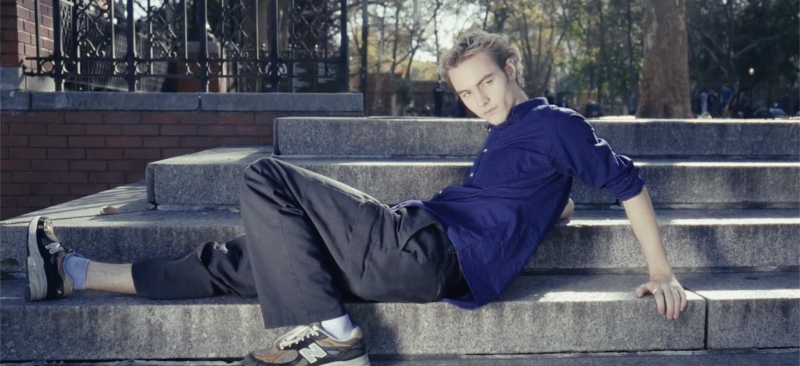
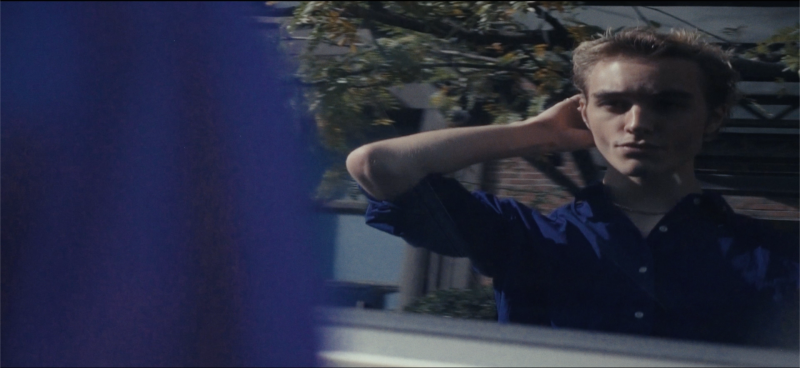
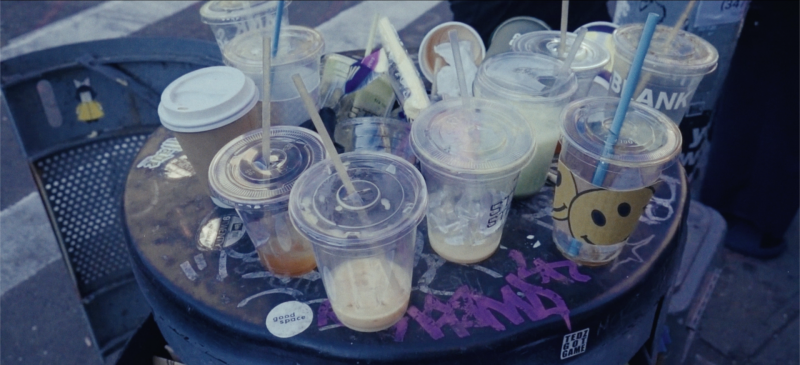
Serve zieht seine Energie aus dem Feed und verwandelt Internetkultur in Kino mit Main-Character-Energy. Gen Z hat den alten Verblendungszusammenhang per Swipe verlassen und bewegt sich durch eine Stadt, deren Oberflächen Begehren, Arbeit und Sichtbarkeit zugleich reflektieren. »To serve« wird hier zur Ansage an die Performance und an den Preis des Sichtbarwerdens. In den sozialen Choreografien des Films treten Körper nach einem delulu-Skript auf, glowen durch die Häuserschluchten von New York, das sich als vergangene hyperkapitalistische Fiktion entpuppt, und erfinden dort trotzdem eine eigene Grammatik des Begehrens. Serve fragt, was Berühmtheit im Realismus des Spätkapitalismus verspricht, wenn Sichtbarkeit zur Währung und das Selbst zur spekulativen Anlage wird. It’s giving queere Körper. It’s giving Slay als Klassenanalyse.
Serve draws its energy from feeds, turning internet culture into cinema with »main character energy«. Generation Z has swiped away the old illusion-based structure of society and moves through a city whose surfaces simultaneously reflect desire, labour and visibility. »To serve« becomes an invitation to perform and to consider the cost of becoming visible. In the social choreographies of the film, femme bodies perform a Delulu script, glowing through the urban canyons of New York that reveals itself as a bygone hypercapitalist fiction. Yet they still invent their own grammar of desire. Serve asks what fame promises in the context of late capitalist realism when visibility becomes currency and the self becomes a speculative asset. It’s giving queer bodies. It’s giving slay as class analysis.
Teilen
Regie, Kamera:
Director, Director of photography:
Lexi Zhang
Regie, Script:
Director, Script:
Angel Gonzalez
Regie, Script, Editing, Music:
Director, Script, Editing, Music:
Caden Martel
Nancy, Henri & Elizabeth
Vereinigte Staaten 1973 | Schwarz-Weiss |
16:42 | Englisch
Nancy, Henri & Elizabeth
United States 1973 | Black & White |
16:42 | English
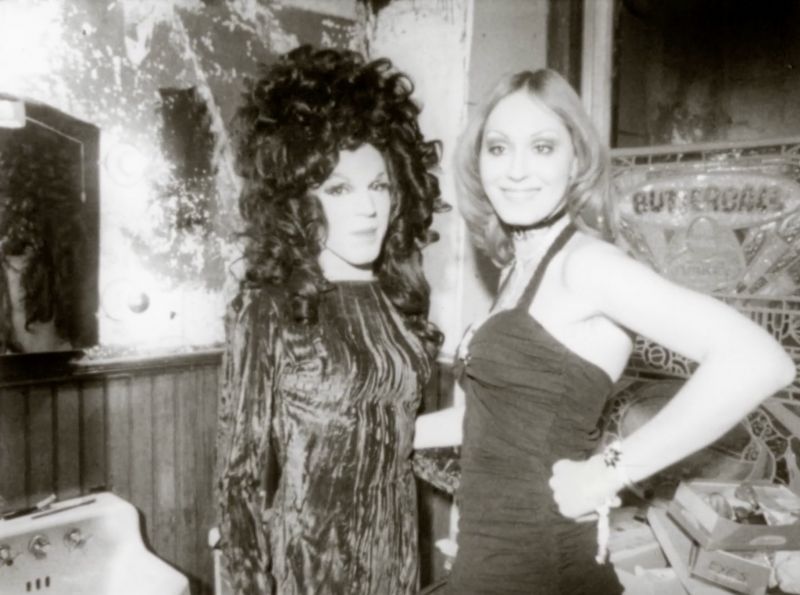
»I played with dolls«, sagt Nancy, als sie nach ihrer Kindheit gefragt wird. In dieser Erinnerung beginnt eine trans Geschichte, die ihren Ursprung sofort in Bewegung versetzt. Nancy, Henri, and Elizabeth schaut auf Hände am Make-up und Perücken, gleitet durch Partys und verweilt dort, wo Menschen füreinander sorgen. Genau wie der Film selbst: Nahaufnahmen ertasten die Gesichter von Nancy, Henri und Elizabeth und geben ihren Geschichten Raum. Das aktuelle politische Echo von »Protect the Dolls« pulsiert dabei durch diese seltenen Filmbilder der Dolls aus dem Nachtleben in Philadelphia der frühen 1970er.
Content notes:
Diskriminierung von LGBTQIA+
When asked about her childhood, Nancy says, »I played with dolls.« This memory marks the beginning of a trans history, setting its origin in motion. Nancy, Henri, and Elizabeth looks at hands applying makeup and arranging wigs, floats through parties, and lingers where people care for one another. Through many shows close-ups of Nancy, Henri, and Elizabeth's faces, the film makes space for their stories. The current political echo of »Protect the Dolls« pulses through these rare images of dolls in Philadelphia’s nightlife of the early 1970s.
Content notes:
Diskriminierung von LGBTQIA+
Teilen
Regie, Script, Kamera, Editing:
Director, Script, Director of photography, Editing:
Bob Aibel
Regie, Script, Editing:
Director, Script, Editing:
Lynn Fagan
Bob Aibel: Can I Get a Quarter? (1985), A Country Auction (1984), Campus Life: The University of Pennsylvania (1978)
The Script
Vereinigte Staaten 2023 | Farbe |
15:00 | Englisch
The Script
United States 2023 | Color |
15:00 | English
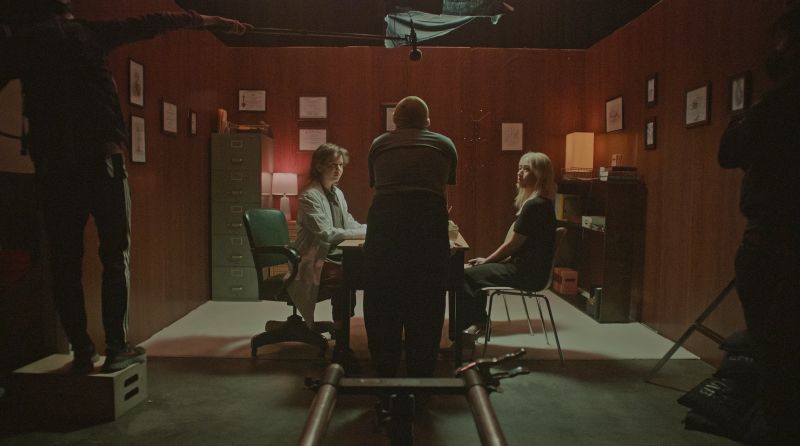
In The Script ist Reenactment eine Form von Empowerment. Brit Fryer und Noah Schamus begreifen das Nachspielen als dokumentarisches Werkzeug, mit dem Trauma durchgearbeitet und andere Existenzweisen erprobt werden können. Der Film folgt dem Skript, das trans* Personen in medizinischen Räumen aufsagen müssen, wenn sie Zugang zu Gesundheitsversorgung erhalten wollen: eine eingeübte Sprache der Symptome und der biografischen Beweise. The Script fragt: Was wäre, wenn Transition mit selbstbestimmter Sorge beginnen dürfte? Denn jenseits der heteronormativen Lügen liegt ein anderes Skript.
Content notes:
Diskriminierung von LGBTQIA+
In The Script, reenactment becomes a form of empowerment. Brit Fryer and Noah Schamus explore reenactment as a documentary tool to work through trauma and experiment with alternative ways of existing. The film follows the script that trans people are required to recite in medical settings when seeking healthcare: a rehearsed language of symptoms and biographical details. The Script asks: What if a transition was allowed to begin with self-determined care? Beyond heteronormative lieslies another script.
Content notes:
Diskriminierung von LGBTQIA+
Teilen
Music:
Music:
Lydia Cornett
Regie:
Director:
Brit Fryer
Regie, Script:
Director, Script:
Noah Schamus
Kamera:
Director of photography:
Pete Quandt
Editing:
Editing:
Viridiana Lieberman
Editing:
Editing:
Grace Mendenhall
Brit Fryer (Selection): Tessitura (2025), Caro Comes Out (2020), Across, Beyond, and Over (2019), Botanical Black (2018), TRANS•IENCE (2016) // Noah Schamus (Selection): Summer Solstice (2022), Kind of (2020), Here With You (2019), Across, Beyond, and Over (2019)
Lana Kaiser
Deutschland 2020 | Farbe |
13:17 | Deutsch
Lana Kaiser
Germany 2020 | Color |
13:17 | German
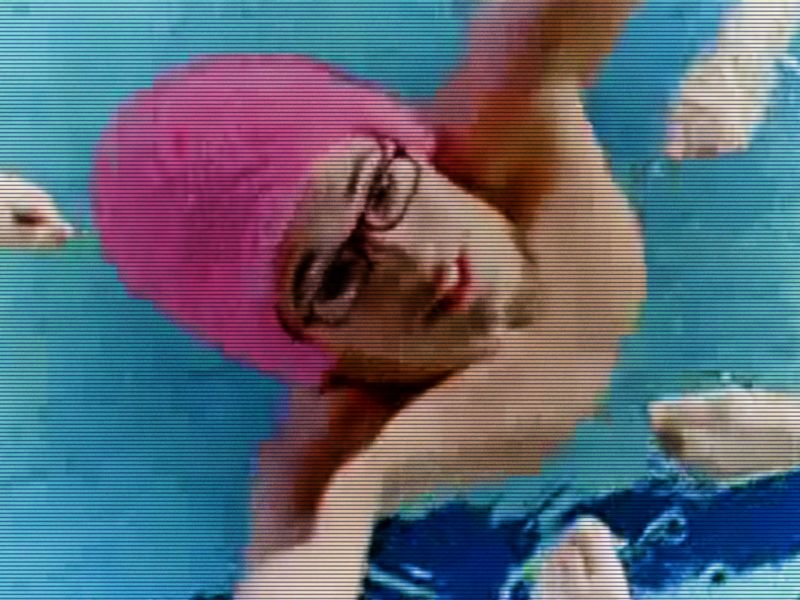
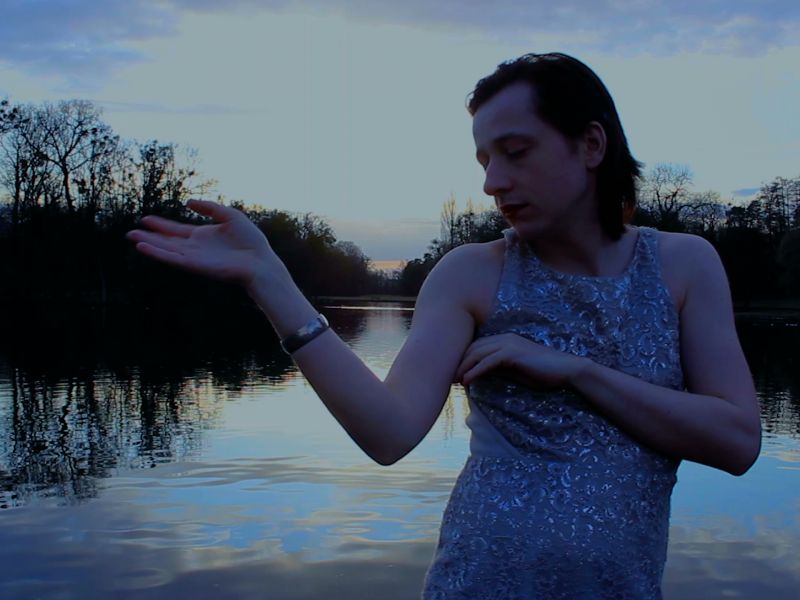
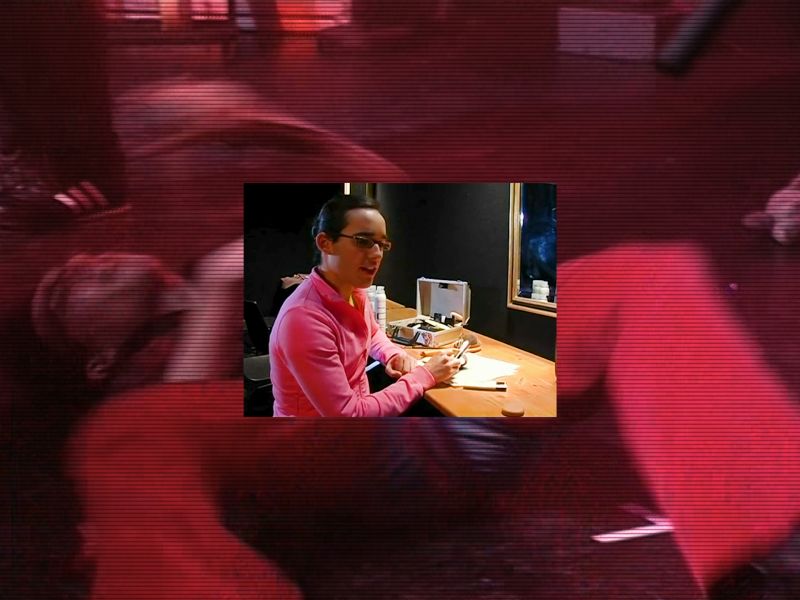
In Lana Kaiser, hält Philipp Gufler an einem Bild fest, das Deutschland seit 2002 kennt. Damals trat Lana, noch unter dem Namen Daniel Küblböck, mit siebzehn Jahren bei »Deutschland sucht den Superstar« auf und sprengte ein Format, das ihre Person zugleich ausstellte und verwertete. Ihr Blick in die Kamera und ihr non-binäres Auftreten ließen eine Fernsehkultur glitchen, die jede Abweichung sofort zur Ware machte. Gufler kehrt in eine Y2K-Welt zurück, deren Looks heute wiederkehren, während Lana fehlt. Dem Rauschen der Beta-TV-Bilder setzt er einen sensiblen Tanz in hochaufgelöstem Digital entgegen und holt so Lana zurück in die Gegenwart.
In Lana Kaiser, Philipp Gufler maintains an image that Germany has known since 2002. Back then, Lana, who was still appearing under the name Daniel Küblböck, entered »Deutschland sucht den Superstar« at the age of seventeen and ruptured a format that displayed and exploited her simultaneously. Her gaze into the camera and her nonbinary presence caused a glitch in television culture, instantly turning every deviation into a commodity. Gufler revisits a Y2K world whose aesthetics are resurfacing today, while Lana is missing. Against the noise of Beta TV images, he sets a sensitive dance in high-resolution digital, and brings Lana back to the present.
Teilen
Regie:
Director:
Philipp Gufler
Kamera:
Director of photography:
Julia Swoboda
Ton:
Sound design:
Nathalie Bruys
Music:
Music:
Rory Pilgrim
The Beginning of Identification, and its End (2024), Gespräch mit Albert Knoll (2023), Lana Kaiser (2020), The Responsive Body (2019), Becoming-Rabe (2016), Gespräch mit Erich Haas (2014), Projektion auf die Krise (Gauweilereien in München) (2014)

Veni Etiam
Deutschland 2021 | Farbe |
09:00 | Englisch
Veni Etiam
Germany 2021 | Color |
09:00 | English
Veni Etiam erinnert an ein Urlaubsvideo, das sein eigenes Geheimnis kennt. Die Kamera gleitet beiläufig durch Venedig, und diese Ästhetik des Heimlichen changiert in die Form hinein und aus ihr heraus. Venedig wurde schon hundertmal gesehen. »In Venice one can sense a communication with time. I have known Venice for many hundreds of years.« Mit diesem Satz lässt Veni Etiam Zeit aus der Geraden treten, während eine Gondel mit ihrem trans Gondoliere durch die Kanäle gleitet. Die Fahrt wächst zu einer verwandelnden Überfahrt.
Veni Etiam is reminiscent of a vacation video which knows of its own secret. The camera casually floats through Venice, and this furtive aesthetics shifts in and out of the film's form. Venice has already been seen hundreds of times. »In Venice, one can sense a communication with time. I have known Venice for many hundreds of years.« With this sentence, Veni Etiam lets time fall out of its linear order while a gondola and its trans gondolier glide through the canals. The journey becomes a transformative passage.
Teilen
Regie:
Director:
Alex Hai
Regie:
Director:
Mahtab Mansour
Kamera:
Director of photography:
Manelli Hosseini
Editing:
Editing:
Debra Gavlak
Ton:
Sound design:
Juan Sanchez
Surface of the Film
Deutschland 2026 | Farbe |
09:08 | Englisch
Surface of the Film
Germany 2026 | Color |
09:08 | English
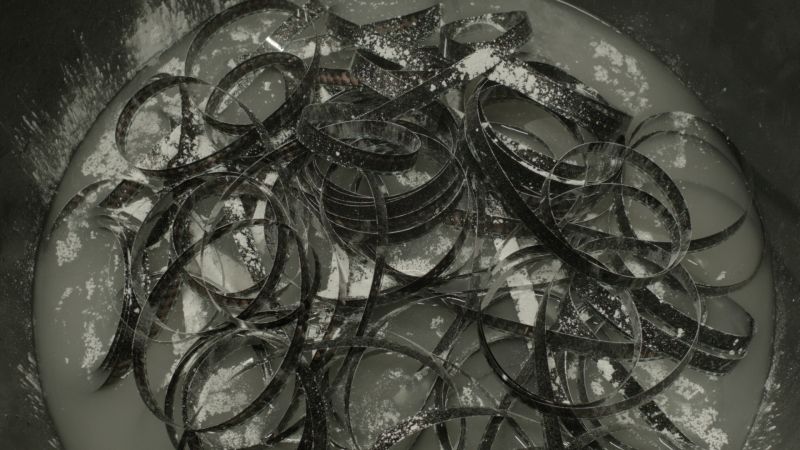
Surface of the Film überführt die Oberflächenspannung des Films in den analogen Prozess der Filmentwicklung. Der Filmkörper erscheint, als wäre er in Kreide, Soda, Salz und Seife getaucht, jene DIY-Tünche, die Wände in sowjetischen Institutionen überzog. Auch hier schützt die Schicht und greift an. Sie deckt zu, lässt Spuren hervortreten und trägt Kratzer, Flecken und Unschärfen in die Emulsion. Im eigenen Material sucht der Film ein Äquivalent für Verwundbarkeit, wo vergeschlechtlichte, trans und weiblich gelesene Körper Schutz suchen und dem Blick ausgesetzt bleiben.
Surface of the Film carries the surface tension of film into the analog process of film development. The film appears as if immersed in a solution of chalk, soda, salt, and soap—the same mixture Soviet DIYers once used to whitewash hospitals, schools, and orphanages. Here, too, the layer both protects and attacks. It covers up, lets traces emerge, and carries scratches, stains, and blurs into the emulsion. Through its own material, the film searches for an equivalent to human vulnerability where gendered, trans, and female bodies seek protection while remaining exposed to the violence of the gaze.
Teilen
Kamera:
Director of photography:
Jona Dhorn
Kamera, Ton:
Director of photography, Sound design:
Katja Izmestyeva
Regie:
Director:
Maria Ignatenko
Achrome (2021), In Deep Sleep (2019)

Trans
Venezuela 1982 | Farbe |
22:06 | Spanisch
Trans
Venezuela 1982 | Color |
22:06 | Spanish
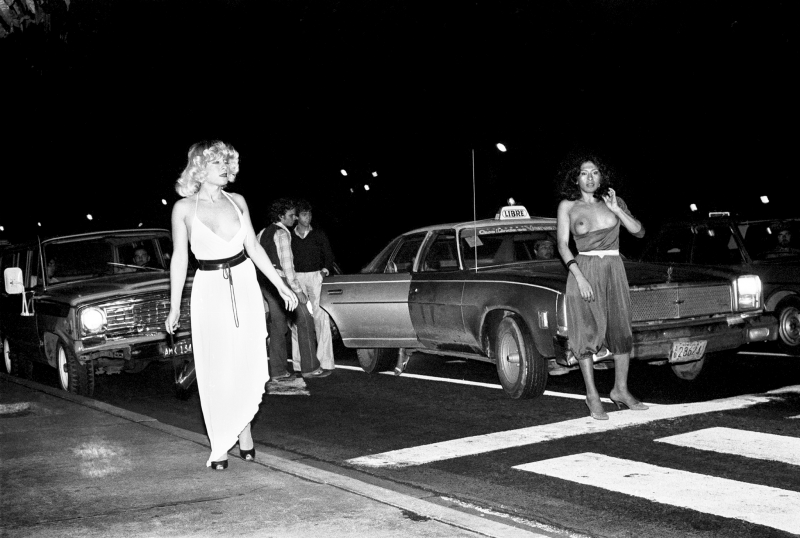
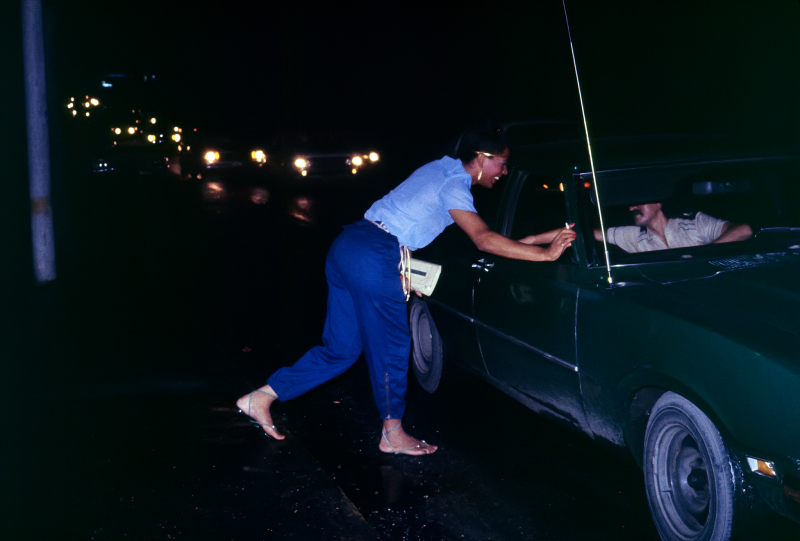
Manuel Herreros de Lemos und Mateo Manaure Arilla verbrachten fast ein Jahr in engem Kontakt mit einer Gemeinschaft von trans* Sexarbeiterinnen, die sich selbst »Transformistas« nannten, bevor sie ihren Dokumentarfilm Trans (1982) fertigstellten. Die Filmemacher wollten die prekäre gesellschaftliche Position von trans* Frauen in einem Moment sichtbar machen, in dem jede Form dieser Repräsentation ein hohes Risiko barg. Als Trans in der Cinemateca Nacional de Venezuela Premiere feierte, versuchte die Polizei, sowohl die Filmemacher als auch die fünfundzwanzig anwesenden trans* Frauen zu verhaften. Der Dokumentarfilm eröffnet seltene Einblicke in die Gemeinschaft der »transformistas«, ihre Aushandlungen von Sexarbeit und wie sie inmitten der monumentalen Architektur des Caracas der 1980er-Jahre Lust und Vergnügen fanden. Ihre Geschichten, Überlebensstrategien und persönlichen Hoffnungen sind für die trans Geschichte, die gegenwärtigen Kämpfe und die queeren Zukünfte von unschätzbarem Wert.
Content notes:
Diskriminierung von LGBTQIA+
Manuel Herreros de Lemos and Mateo Manaure Arilla spent nearly a year embedded with a community of trans sex workers — women who called themselves transformistas — before completing their documentary
Trans (1982). The filmmakers sought to confront the precarious position of trans women in society at a moment when the stakes of such representation were grave. When Trans premiered at the Cinemateca Nacional de Venezuela, police attempted to arrest both the filmmakers and the twenty-five trans women in attendance. The documentary offers rare glimpses into how las transformistas forged community, navigated sex work, and carved out pleasure amid the monumental mid-century architecture that defined 1980s Caracas. Their stories, survival strategies, and personal aspirations remain invaluable to trans history, present struggles, and queer futures.
Content notes:
Diskriminierung von LGBTQIA+
Teilen
Regie, Editing:
Director, Editing:
Manuel Herreros de Lemos
Regie, Editing:
Director, Editing:
Mateo Manaure Arilla
Kamera:
Director of photography:
Youssef Jahanara
Editing:
Editing:
Leonardo Henríquez
Ton:
Sound design:
Guillermo Cabrices
Mateo Manaure Arilla: Milagro de navidad en Petare (2019), Primavera en Petare (2019), Inocencia Mortal (1988)
