Internationaler Wettbewerb 7: Fallback
International Competition 7: Fallback
 This Desirable Device
Deutschland, Serbien 2026 | Schwarz-Weiss und Farbe |
17:23 | Arabisch, Englisch, Deutsch, Serbisch
This Desirable Device
Germany, Serbia 2026 | Black & White and Color |
17:23 | Arabic, English, German, Serbian
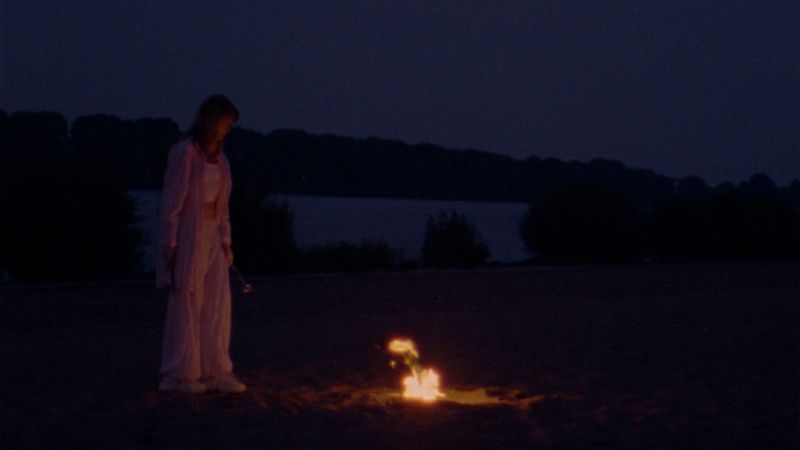
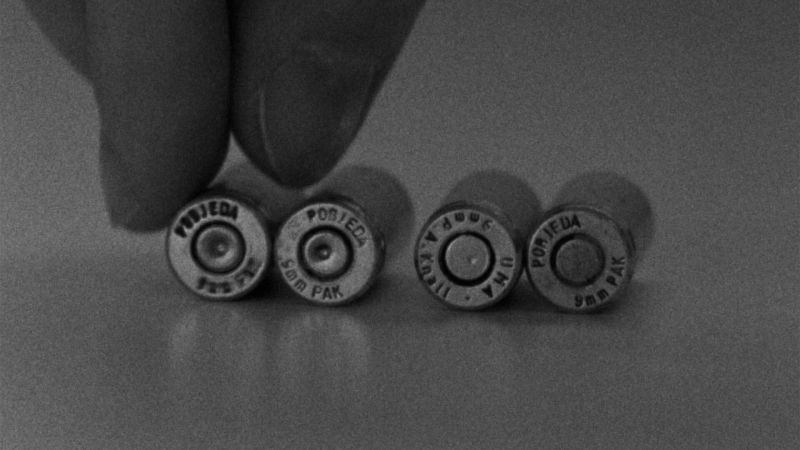
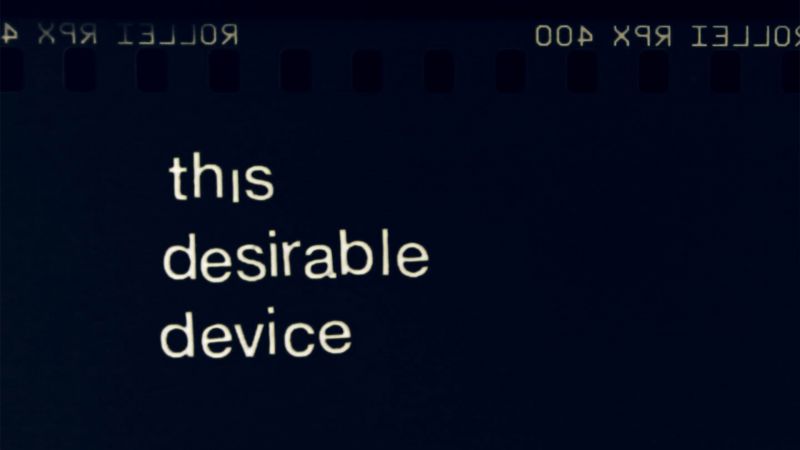
Ein Wort, ein Begriff entsteht Schritt für Schritt durch das allmähliche Auftragen von Klebebuchstaben, dann wird ein rassistischer Witz analysiert, zerlegt in die Einzelteile seiner Vorannahmen und linguistischen Operationen. Eine junge serbische Filmemacherin immigriert nach Deutschland und macht einen Film, Vorgänge voller Hürden und Vorraussetzungen, von denen hier keine unbefragt bleibt. Wie lässt sich etwas sagen? Und in welcher Sprache? Verborgene Transaktionen werden bildförmig: von der papiernen, staatlich verbürgten (migrantischen) Existenz zu den Kadern des kostspieligen 16-mm-Filmmaterials reflektiert This Desirable Device, komplex verschlungen, wütend verschmitzt, den Akt des Filmemachens als politische Geste in einer durchherrschten Welt – und lenkt den Blick auf Strukturen von Macht, die sich hinter jedem Erzeugen von Sinn verbergen. (Sebastian Markt)
A word, a concept emerges step by step through the gradual application of adhesive letters; then a racist joke is analysed, broken down into the individual components of its preconceptions and linguistic operations. A young Serbian filmmaker immigrates to Germany and makes a film; processes fraught with hurdles and preconditions, none of which remain unquestioned here. How can one say something? And in which language? Hidden transactions take on visual form: reflecting on the paper-based, state-sanctioned (migrant) existence and the frames of costly 16mm film stock, This Desirable Device—complexly intertwined, furiously mischievous—portrays the act of filmmaking as a political gesture in a world under domination, and draws attention to the structures of power concealed behind every act of meaning-making. (Sebastian Markt)
Teilen
Regie, Produzent:in, Darsteller:innen, Editing, Kamera, Ton:
Director, Producer, Cast, Editing, Director of photography, Sound design:
Mina Simendić
Walks That Won't Happen (2024)
نامرئی (Invisible)
Iran 2026 | Farbe |
20:33 | Farsi
نامرئی (Invisible)
Iran 2026 | Color |
20:33 | Farsi
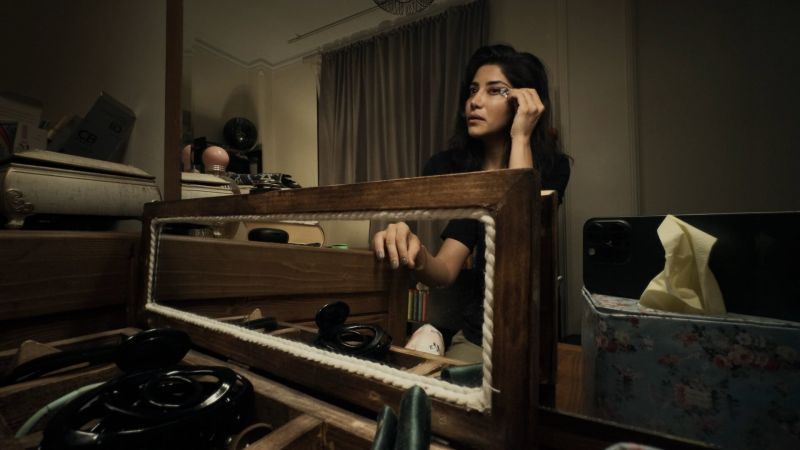
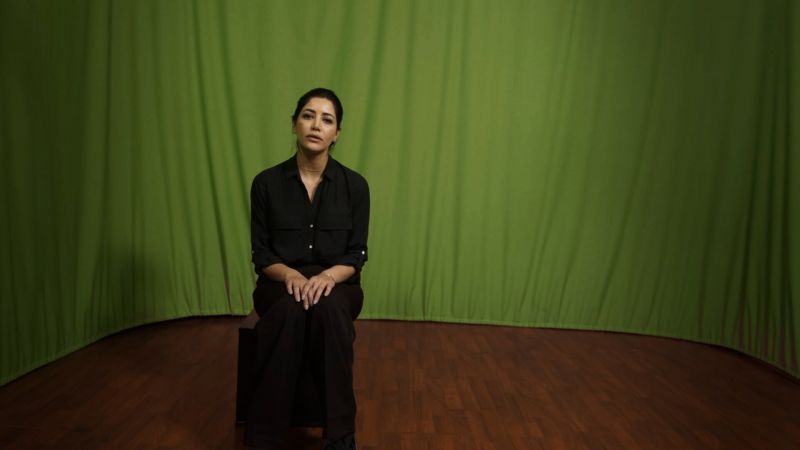
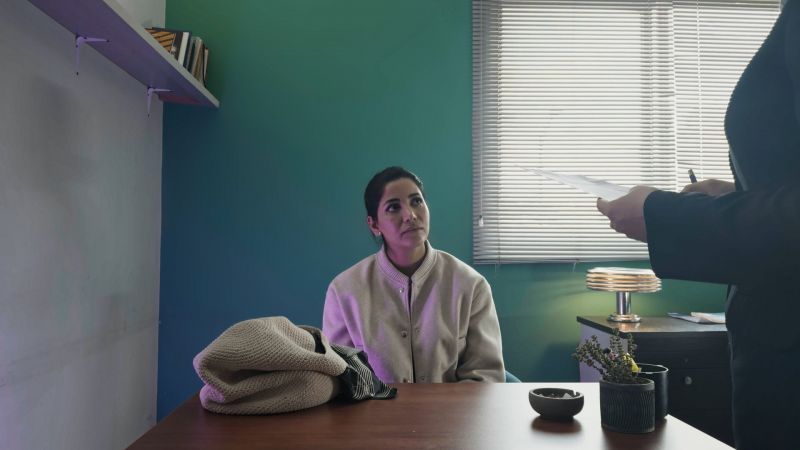
»Bevor ich es gesagt habe, war dort nichts, aber jetzt ist da ein orangefarbener Fuchs.« Auf ganz ähnliche Weise haben iranische Frauen durch ihre Proteste gezeigt, wie das, was einst nicht existierte oder unmöglich schien, Gestalt annehmen und in der Gesellschaft zum Leben erweckt werden kann. Sanjari, die ursprünglich Schauspielerin war, begann – wie viele andere iranische Künstlerinnen auch – im Zuge der »Frau, Leben, Freiheit«-Bewegung, ihre Kunst zu hinterfragen. Angesichts einer Gesellschaft im Umbruch fragt sie sich: »Wie kann ich Ophelia mit Kopftuch und langem Kleid spielen«, während Frauen im ganzen Land auf den Straßen für genau diese Kleidungsstücke alles riskieren? Ihre Doku-Fiktion, die mit begrenzten Mitteln auf einem Mobiltelefon gedreht wurde, ist von tiefer Ehrlichkeit geprägt und fängt die Dilemmata ein, mit denen viele iranische Frauen heute bei ihren beruflichen Entscheidungen konfrontiert sind. Wo liegen die Grenzen der Kunst – und wie weit reicht die Verantwortung des/der Künstler:in in solchen Momenten? (Ghasideh Golmakani)
Content notes:
Politische Gewalt, Diskriminierung von Frauen
»Before I said it, there was nothing there, but now there is an orange fox.« In much the same way, Iranian women, through their protests, have shown how what once seemed nonexistent or impossible can take shape and come to life within society. Sanjari, originally an actress, like many other Iranian performers, began to question her art in the wake of »Woman, Life, Freedom.« Confronted with a society in upheaval, she asks: »How can I play Ophelia in a headscarf and long dress«, while women across the country risk everything in the streets over those same garments? Shot on a mobile phone with limited resources, her docu-fiction is written with a profound honesty, capturing the dilemmas many Iranian women face today in their professional choices. Where are the limits of art, and how far does the artist’s responsibility extend in such moments? (Ghasideh Golmakani)
Content notes:
Politische Gewalt, Diskriminierung von Frauen
Teilen
Regie, Produzent:in, Script, Darsteller:innen:
Director, Producer, Script, Cast:
Sonia Sanjari
Script:
Script:
Amirrreza Jalalian
Kamera:
Director of photography:
Davood Malek Hosseini
Editing:
Editing:
Siavash Farhadi
Music:
Music:
Mahdi Rismani
Ton:
Sound design:
Ramin Abousedgh
Darsteller:innen:
Cast:
Shoja Giyahi
Darsteller:innen:
Cast:
Sepideh Berenji
Darsteller:innen:
Cast:
Nafiseh Zare
Darsteller:innen:
Cast:
Maryam Gorji
Verleihfirma:
Distributor:
AM Studio
Produzent:in:
Producer:
Hamed Zolfaghari
Produktionsfirma:
Production company:
Crazy Woodpecker Film Studio
A Long Walk (2023)
Trizas (Shards)
Bolivien 2025 | Farbe |
14:17 | Englisch, Spanisch
Trizas (Shards)
Bolivia 2025 | Color |
14:17 | English, Spanish
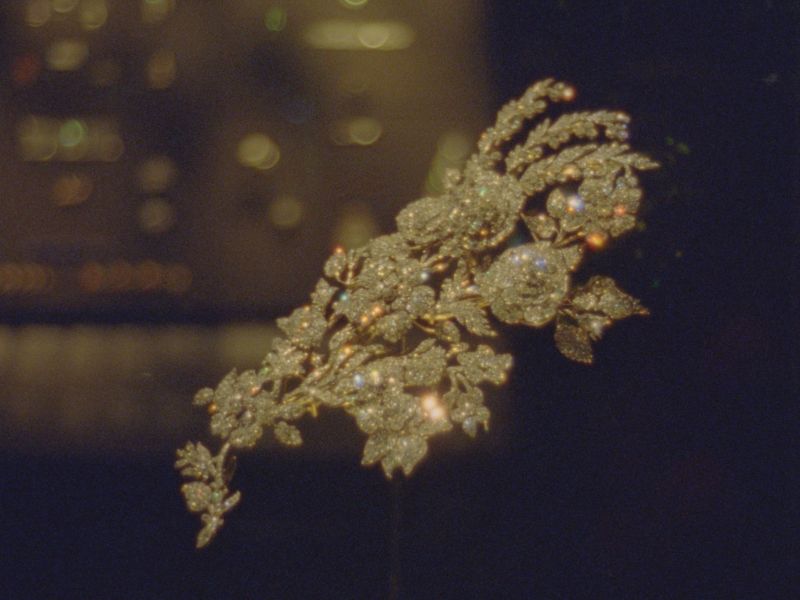
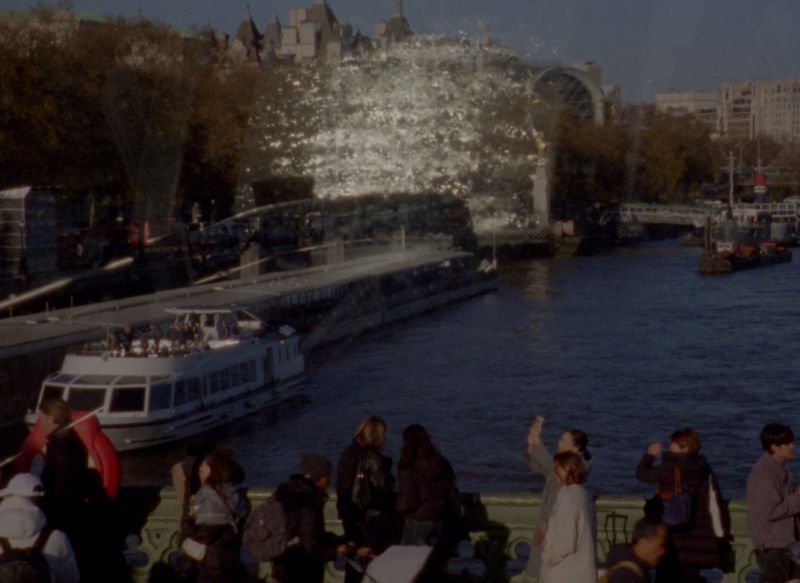
Auf einer Konferenz über die Restitution ethnografischer Objekte provozierte der kamerunische Philosoph, Historiker und Politikwissenschaftler Achille Mbembe sein europäisches Publikum: Der Wunsch, geraubte Dinge nun unbedingt zurückzugeben, spiegele auch das Bedürfnis, alles wieder an seinen Platz rücken zu wollen, um die bösen Geister der Archive endlich loszuwerden. Zugespitzt vielleicht. Doch die Frage bleibt: Wie begegnen wir diesen Sammlungen? Dieselbe Frage treibt Luciana Decker Orozco um. Die bolivianische Filmemacherin ringt mit den Geistern des kolonialen Blickregimes, das Sichtbarkeit mit Wissen und Macht koppelt. Auf einer Reise nach London filmt sie in Museen Objekte aus ihrer Heimat. Die Bilder wackeln, werden unscharf, überblenden. Dann weitet sich ihr Blick in die Stadt hinein. Draußen funkelt die Themse wie Gold aus den Minen Boliviens. Schön sieht es aus. Und es blendet. (Theresa George)
Content notes:
Koloniale Gewalt
At a conference on the restitution of ethnographic objects, Cameroonian philosopher, historian and political scientist Achille Mbembe provoked his European audience: the desire to return looted items at all costs, he argued, also reflects a need to put everything back in its place and thus to finally rid ourselves of the evil spirits of the archives. Perhaps a bit of an exaggeration. Yet the question remains: how do we engage with these collections? The same question preoccupies Luciana Decker Orozco. The Bolivian filmmaker grapples with the ghosts of the colonial gaze, which links visibility with knowledge and power. On a trip to London, she films objects from her homeland in museums. The images wobble, become blurred, fade into one another. Then her gaze widens to take in the city. Outside, the Thames glitters like gold from the mines of Bolivia. It looks beautiful. And it is dazzling. (Theresa George)
Content notes:
Koloniale Gewalt
Teilen
Ton:
Sound design:
Tom Dixon
Music:
Music:
Fatmeh Villalba
Regie, Script, Kamera, Editing, Ton:
Director, Script, Director of photography, Editing, Sound design:
Luciana Decker Orozco
Puro andar (2025), What Humans See as Blood, Jaguars See as Chicha (2023), Objetos Parlantes (2021), Larama (2020), Belén (2020), Nana (2016)
Як добре, що ми їх не бачимо (I Do Not See When Shooting)
Ukraine 2025 | Farbe |
15:40 | Ukrainisch
Як добре, що ми їх не бачимо (I Do Not See When Shooting)
Ukraine 2025 | Color |
15:40 | Ukrainian
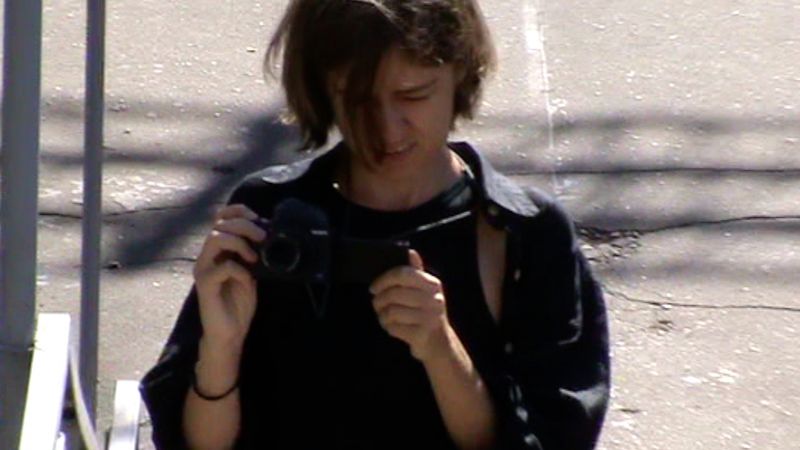
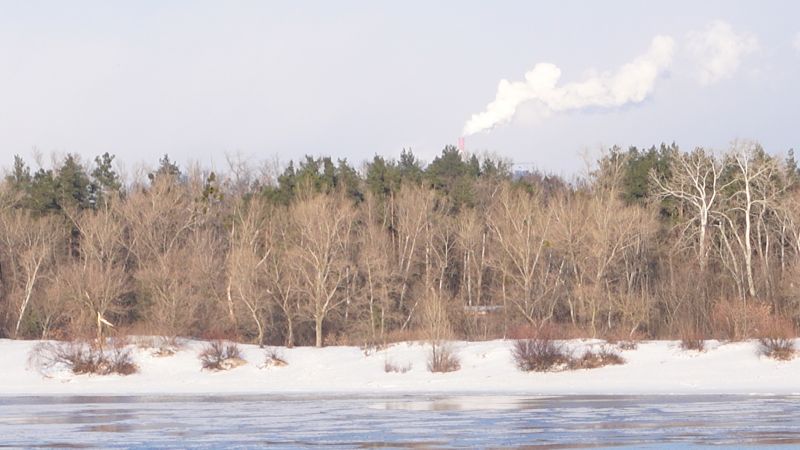
Zwei Freunde streifen durch Kyjiws »Yebenya« (ukrainischer Slang: ein abgelegener, vergessener Ort – wörtlich »der Arsch der Welt«), springen in Stadtbahnen, folgen den Schornsteinen und Stromleitungen des angeschlagenen ukrainischen Stromnetzes und unterhalten sich über die (Un-)Fähigkeit zu weinen. Eine alte DV-Kamera ist wie gebannt von Rauch, der sich in Wolken auflöst, doch ihr Blick wird immer wieder von militärischen Befehlen unterbrochen, die das Kriegsrecht durchsetzen: »Schau mal, wie schön.« — »Ist mir egal. Lösch das.« Sie löschen es – und filmen erneut. Das Filmen wird zu einer Trotzreaktion, dazu, darauf zu bestehen, am Leben zu sein. Das zitternde Bild sucht nach etwas, an dem es sich in einer erdrückenden Realität festhalten kann, verweilt auf einem vertrauten Gesicht und zoomt auf tränenfeuchte Augen. »Ich brauche das wirklich.« Ein rohes, elektrisierendes Debüt, in dem die Entscheidung, was man sieht, zu einem Akt des Widerstands wird. (Yulia Serdyukova)
Content notes:
Flucht- oder Kriegserfahrung
Two friends drift through Kyiv’s »yebenya« (Ukrainian slang: a remote, forgotten place — literally »the ass-end of nowhere«), hopping city trains, tracing smokestacks, and power lines of Ukraine’s wounded electrical grid, chatting about the (in)ability to cry. An old DV camera is obsessed with smoke dissolving into clouds, its gaze repeatedly cut by military commands enforcing martial law: »Look, how beautiful.«— »I don’t care. Delete it.« They erase — and film again. Filming becomes defiance, a way to insist on being alive. The trembling image searches for something to hold onto in a stifling reality, pausing on a familiar face and zooming in on teary eyes. »I really need this.« A raw, electrifying debut, where choosing what to see becomes an act of resistance. (Yulia Serdyukova)
Content notes:
Flucht- oder Kriegserfahrung
Teilen
Regie, Produzent:in, Kamera:
Director, Producer, Director of photography:
Anastasia Stetsenko
Kamera:
Director of photography:
Uliana Pikhorovych
Editing:
Editing:
Taras Spivak
Ton:
Sound design:
Luka Milosavljevic
Ton:
Sound design:
Tarun Madupu
Ton:
Sound design:
Margaryta Kulichova
Meltemi (2026)
The Creature of Darkness
Vereinigte Staaten 2025 | Farbe |
15:36 | Englisch
The Creature of Darkness
United States 2025 | Color |
15:36 | English
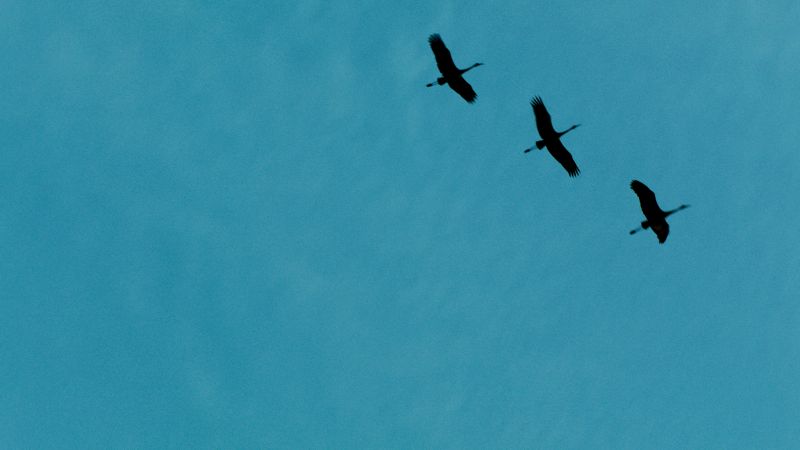
Das Licht des Kinoprojektors braucht die Dunkelheit des Saals ebenso sehr wie das Feuer in der Höhle; nur so kann die Magie des kollektiven Rituals wirken. Ein Ritual, eine Begegnung, eine sinnliche Wanderung, die die Vergangenheit durch die gegenwärtige Erfahrung umfasst. Ein wunderschöner Film, der in zeitlicher Suspension schwebt, der in geologischen Spuren nach Gedächtnis sucht, der es wagt, das Unsichtbare zu erreichen (um die Vorstellungskraft zu beflügeln). Mit diesem Film verdeutlichen Lisa Malloy und Ray Whitaker die Kraft der kurzen Form: die Möglichkeit des Geheimnisses, die Schönheit des Fragments. The Creature of Darkness ist eine Tür, die sich öffnet: In den Grenzgebieten des amerikanischen Nordens und Südens, im Herzen der Region »Little Egypt« im Süden von Illinois, erzählten sie sich am Feuer Geschichten. Am Feuer waren sie endlich frei. (Alejo Franzetti)
The light from the film projector needs the darkness of the theater just like the fire in the cave; only then can the magic of the collective spell take hold. A spell, an encounter, a sensory drift that encompasses the past through the present experience. A beautiful film that floats in temporal suspension, seeking memory in geological traces, daring to capture the invisible (to empower imagination). With this film, Lisa Malloy and Ray Whitaker highlight the power of the short form – the possibility of mystery, the beauty of the fragment. The Creature of Darkness is a door that opens: In the borderlands of the American North and South, in the heart of the »Little Egypt« region of Southern Illinois, around the fire, they told stories. Around the fire they were, at long last, free. (Alejo Franzetti)
Teilen
Regie, Kamera, Editing, Script, Ton:
Director, Director of photography, Editing, Script, Sound design:
Lisa Malloy
Regie, Script, Editing, Ton:
Director, Script, Editing, Sound design:
Ray Whitaker
Script:
Script:
ZahKarri Levy
Script:
Script:
Brielle Woods
Script:
Script:
Erin Whitaker
Darsteller:innen:
Cast:
ZahKarri Levy
Darsteller:innen:
Cast:
Brielle Woods
Darsteller:innen:
Cast:
Erin Whitaker
Darsteller:innen:
Cast:
Ray Whitaker
Produzent:in:
Producer:
Jennifer Reeder
Sound Mixing:
Sound Mixing:
Homer Mora
On the Battlefield (2024)
